-
Upcycling textile waste into gorgeous colors
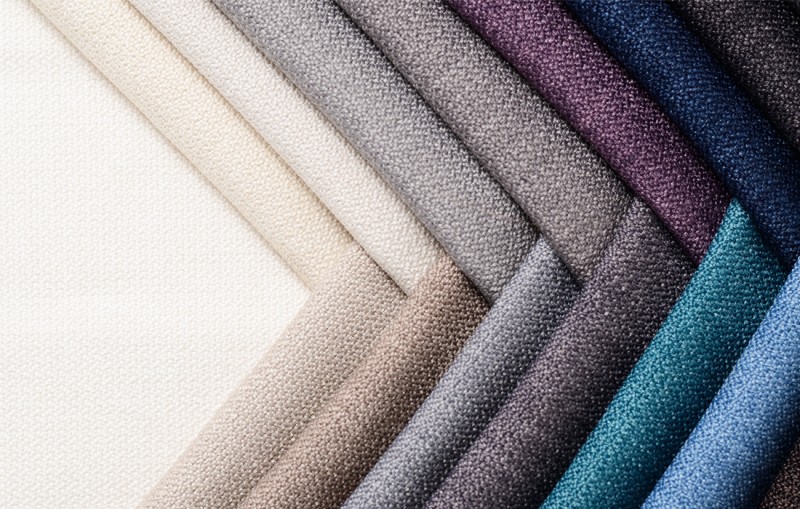 Archroma has introduced a ground-breaking innovation – the FiberColors* technology. With this, Archroma upcycles textile waste into gorgeous colors. The colors are synthesized from a minimum content of 50 percent waste-based raw material.
With the Earth population reaching 8 billion in November 2022, the need to address the issue of textile waste becomes more critical.
According to earth.org, 92 million tons of textile waste is produced every year, a number that is expected to soar to 134 million tons by the end of the decade. Around 85 percent of all textiles discarded in the US are said to end up in landfills, leading to land and water pollution impacting first and foremost local communities.
Archroma, a company who creates colors for fashion, decided to look at the issue creatively: what if it could create colors from waste fashion?
Archroma had already developed a way to turn waste from the herbal and food industry into its range of EarthColors® featured by brands such as G-Star, Patagonia, Esprit, Tom Taylor, Pangaia, UGG and Primark.
Archroma is now introducing another ground-breaking innovation: the FiberColors* technology. With this technology, Archroma upcycles textile waste into gorgeous colors. The colors are synthesized from a minimum content of 50 percent waste-based raw material.
Archroma’s R&D experts have developed a way to use cotton and/or polyamide and their blends (with a > 95 percent purity) to substitute the major part of the petroleum-based raw material usually used to make dyestuff.
The resulting FiberColors* range, which is patent-pending and therefore exclusive to Archroma, includes five dyes covering a palette of timeless shades: Diresul® Fiber-Teak (brown shades), Diresul® Fiber-Ochre (olive shades), Diresul® Fiber-Maroon (bordeaux shades), Diresul® Fiber-Slate (blue grey shades) and Diresul® Fiber-Graphite (dark grey shades).
The dyes are especially suited for cellulose fibers such as cotton, viscose, linen and kapok, and can be used in continuous, exhaust, denim and garment dyeing and printing processes.
With this, a brand can turn its own pre- and post-consumer textile waste into its own beautiful colors, and create a complete collection including t-shirts, chinos, sweatshirts, hoodies, polo shirts, and home textiles.
FiberColors* are ideal for forward-thinking companies who want to help find a solution to textile landfills, and at the same time give value to waste including articles collected in their take-back schemes that cannot be reused.
“After creating colors from food and herbal waste with EarthColors®, we are taking a step further in circular manufacturing with FiberColors*, addressing the huge textile and fashion waste global issue. This is how we make our purpose to lead our industry towards a more sustainable future for our customers and markets, a reality. Because it’s our nature,” said Heike van de Kerkhof, Chief Executive Officer of Archroma.
source: www.worldofchemicals.com
-
FEIN launches world record breaking core drilling machine
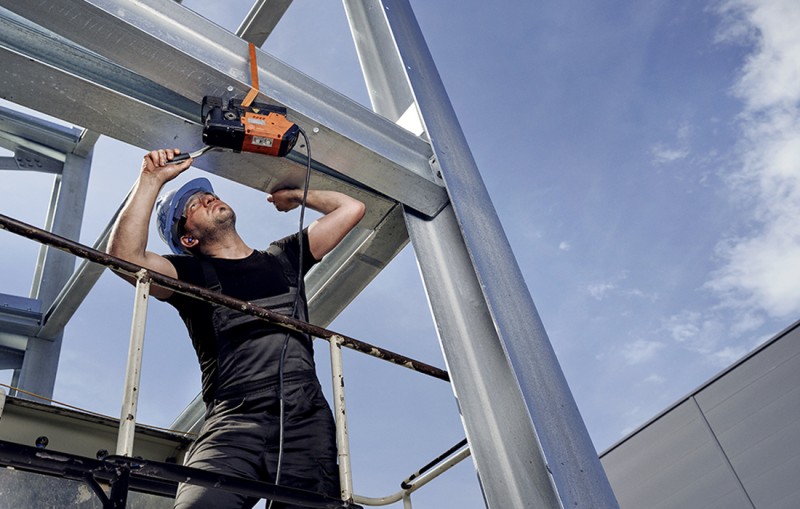
FEIN, the leading power tools and accessories manufacturer, has launched the world’s smallest compact core drilling machine with right and left rotation, the KBC 36 Magforce, to the UK’s metalworking market.
The Magforce has a tiny installation height of just 169 mm and a length of 290mm, making it the world’s most compact drill of its kind. It’s small size, lightweight design and brushless 1200W high-power motor allows users to operate in smaller and harder-to-reach spaces than ever before, with an unmatched level of efficiency.
The low-wear and long-life tool design features a spindle sleeve feed without clearance and high gearbox positioning, offering the optimum view of the drilling point and facilitating accurate results even in tough positions. Furthermore, the Magforce offers a powerful drilling experience with no compromise on safety. It’s integrated tilt sensor and 10,000N magnetic holding force ensure that users can safely complete a huge range of jobs, including vertically and overhead.
With unlimited application possibilities, due to its adaptable nature, the Magforce is set to unlock performance benefits for a wide-ranging audience, including those working across structural steel, shipbuilding, vehicle and truck modification, chassis or tanker work and general fabrication and engineering, to name a few examples.
“Versatility is at the heart of the KBC 36 Magforce’s design. With forward and reverse running, electronic speed settings and cutting depths of up to 35mm, the Magforce is universal and can be used for any project, big or small,” comments Andy Mills, managing director, FEIN UK.
FEIN has a rich history in providing application-based solutions for end-users across metalworking sectors. With over 150 years’ experience in manufacturing power tools, FEIN is research and innovation-led, continuing to meet the industry’s needs with new product features year after year.
“At FEIN, we spend time with our customers, gaining a deep understanding of how they use our tools and how we could evolve the products further to suit their future needs too. We know that strong performance looks different across the sectors that our users operate in, therefore we are driven to create multi-functional tools to meet these needs, with safety at the forefront of our ideas.
“The launch of the Magforce has been highly-anticipated within the business, due to its unprecedented dimensions and powerful motor. We are really excited to see the machine in action with our customers, and to explore the new use cases that its size will unlock!” concludes Andy.
source: www.machinery.world
-
Discovery advances biofuel crop that could curb dependence on fossil fuel

Michigan State University researchers have solved a puzzle that could help switchgrass realize its full potential as a low-cost, sustainable biofuel crop and curb our dependence on fossil fuels.
Among switchgrass’s attractive features are that it’s perennial, low maintenance and native to many states in the eastern U.S., including Michigan. But it also has a peculiar behavior working against it that has stymied researchers — at least until now.
Berkley Walker’s team in MSU’s Department of Plant Biology has revealed why switchgrass stops performing photosynthesis in the middle of the summer — its growing season — limiting how much biofuel it yields.
This knowledge, published in the journal Frontiers in Plant Science, is a key piece to overcoming this quirk and getting the most out of switchgrass.
“We want bigger plants, period, so being able to crack this and lift this limitation, that is the goal,” said Mauricio Tejera-Nieves, a postdoctoral researcher and the lead author of the team’s study.
Tejera-Nieves, Walker and their colleagues discovered the explanation for this limitation in switchgrass’s rhizomes. These are little knobby structures that live underground among the plant’s roots. If you’ve ever sliced or shredded ginger, you’ve held a rhizome.
Rhizomes store food in the form of starch to help plants survive winter, and that starch is made from the sugars produced by photosynthesis. Once switchgrass rhizomes are full of starch, they signal the plant to stop making sugars and adding biomass through photosynthesis.
Tejera-Nieves compared the rhizomes to a bank, albeit a slightly unusual one.
“Imagine getting a call from your bank and they tell you, ‘Hey, your account is full. You can take a vacation, go on sabbatical, do whatever you want. Just stop working because we’re not storing any more money,’” Tejera-Nieves said. “It’s a very conservative strategy, but it’s one that works for switchgrass. The longer it’s doing photosynthesis in nature, the more likely it is that an animal will eat it or something else bad will happen.”
Although this evolutionary strategy has worked to the plant’s advantage in nature, it is a disadvantage for humans who want to ferment switchgrass’s biomass into biofuel. By understanding the root cause of this behavior, though, researchers can start looking for ways around it.
“Now we can start looking for breeding solutions,” said Walker, an assistant professor in the College of Natural Science who also works in the MSU-Department of Energy Plant Research Laboratory. “We can start looking for plants that have an insatiable appetite for photosynthesis.”
source: www.sciencedaily.com
-
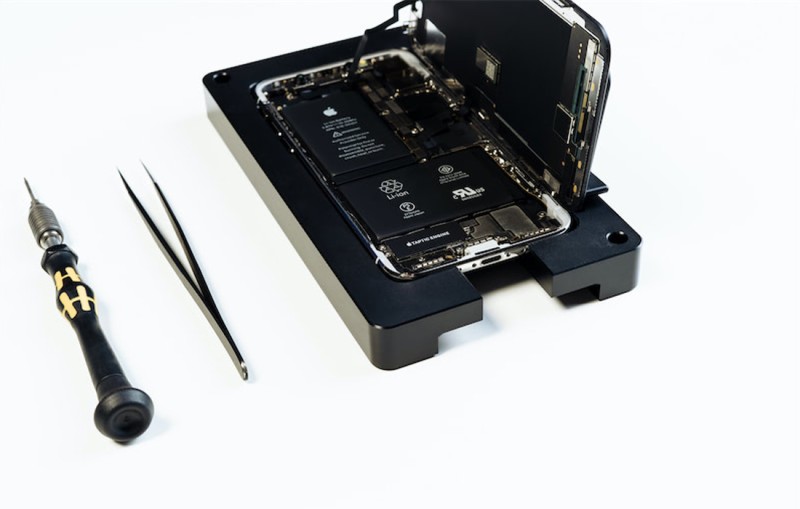
Apple’s $600 M2 Mac mini obliterates the $6,000 Mac Pro

We just got even more proof that it’s high time Apple released a new version of the Mac Pro. Why? Because it just got smoked in a benchmark — and by a device that costs a tenth of its price.
The M2 Mac mini was tested in single-core and multi-core operations and then compared to the Intel-based Mac Pro. Unsurprisingly, the news is all bad for the expensive 2019 workstation.
GregsGadgets on Twitter posted two very telling sets of benchmark results: one for the M2 Mac mini and one for the Intel-based Mac Pro. The Mac mini outperformed the workstation in both single-core and multi-core tests.
Unfortunately, we only know the results of one example, so it’s possible that the Mac mini would still lose against the Mac Pro in different tests. However, in the Geekbench 5 test, the Mac mini scored 1,944 in single-core and 8,790 in multi-core versus the Intel Mac Pro, which only managed to hit 1,019 and 8,037, respectively. This is a huge blow to the 2019 Mac Pro.
This isn’t the first time we’ve seen the M2 chip completely destroy the Mac Pro. Similar benchmark results popped up last summer, starring the 13-inch MacBook Pro. The laptop was able to outperform the Mac Pro despite being around $5,000 cheaper. When you compare the Mac mini to the Mac Pro, the price difference is even more jarring, because the base configuration of the Mac mini costs just $600 — a tenth of the price of the Mac Pro.
Apple’s beastly workstation from 2019 runs on Intel hardware and still sells for $6,000. That’s a scary price, but back then, it definitely made sense to professionals — it was one powerful computer, all set to support resource-heavy tasks such as video editing and rendering. These days, over three years later, it’s safe to say that it no longer makes sense to buy a Mac Pro.
What can you do if you want a new workstation PC? Buy the Mac mini instead or wait for Apple to release the long-awaited Mac Pro that will run on its own M2 silicon. Assuming it comes equipped with an M2 Ultra chip, it will once again be the king of Apple’s entire lineup, as it should be.
source: www.digitaltrends.com
-
Steelcase reimagines iconic Frank Lloyd Wright designs in new furniture line

Steelcase and the Frank Lloyd Wright Foundation have joined forces to relaunch the iconic pieces developed by the renowned architect many decades ago.
GRAND RAPIDS, Mich. – Steelcase and the Frank Lloyd Wright Foundation have joined forces to relaunch the iconic pieces developed by the renowned architect many decades ago.
The Frank Lloyd Wright Racine Collection reintroduces, reinterprets and reimagines the classic furniture designs of Wright, which were originally produced by Steelcase for the SC Johnson Administration building in Racine, Wisconsin in 1939.
“From its beginnings more than 80 years ago, Steelcase’s relationship with Frank Lloyd Wright has helped to revolutionize design for work,” said Meghan Dean, general manager, ancillary merchandising and partnerships at Steelcase. “Now, we continue that mission into the home, as there’s never been a better time to revisit design principles that have always been ahead of their time.”
This collection translates Wright’s aesthetic for today’s work life, with new desk sizes that feature broader dimensions and proportions. For one desk, for example, designers got rid of the cutouts and redesigned the filing system to work as a monitor stand. Its height was increased, and a range of customizable options and sizes are offered. For the chair, they created a woven textile that resembles the original, but also is sturdier for commercial settings.
The collection features an expanded material palette to provide more design choice, as well as new colors. The original collection was offered in maroon. Now, it comes in either obsidian black, warm white or burnished bronze.
The collection includes an 84-inch signature desk for $9,750; a smaller writing console at $2,610; and a lounge chair for $2,609, among others.
-
VOLLMER VDays is Back
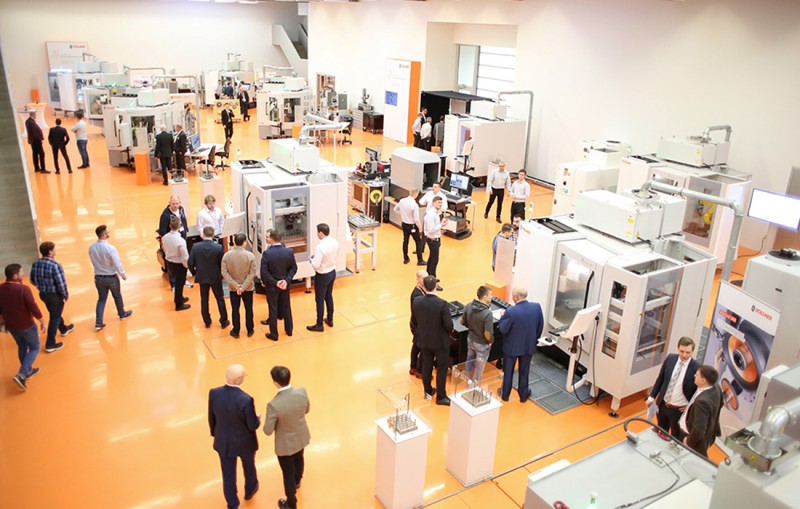
If you manufacture, service or work in the rotary or circular cutting tool industry, be sure not to miss the forthcoming VOLLMER VDays event. This world-famous symposium is back from 18th to the 20th of April following an enforced Covid hiatus. The previous VDays event in 2019 received more than 450 guests over four days and the 2023 event promises to be better than ever before.
The third VDays event will provide exceptional insight for engineers with a full programme of technical presentations, product demonstrations, company tours, virtual reality applications, meetings with industry experts and a phenomenal networking opportunity in an environment of like-minded manufacturers. Spread over three days, the event promises to deliver an unfathomable knowledge transfer opportunity where attendees can learn all the latest insights on the sustainable and efficient sharpening of rotary tools and circular saws. Whether you are a tool manufacturer, sharpening service or sawmill, VOLLMER has the right grinding, eroding and laser processing solutions for your business.
To add as much value as possible to your trip, VOLLMER will also have technical partners at the event as well as experts from the world of academia. With technical partners including Gerling Automation, Haimer, Loroch, Num, Oelheld, UltraTEC, Zoller and others, the event will deliver a well-rounded overview of every aspect of the industry – delivering comprehensive insights and solutions for your business.Taking place at VOLLMER’s headquarters in Biberach, Germany, the three-day symposium will deliver in every aspect. For manufacturers that are yet to see the latest technology advancements from VOLLMER, VDays will be your opportunity to see the new solutions for rotary tool machining. This will include demonstrations of the latest additions to the VGrind product series, the VHybrid 260 erosion-grinding machine tool, and the VLaser 370. For service shops and manufacturers of circular saw blades, the event will be a fantastic opportunity to see the new CS 860 and CSF 860 machines for the processing of tooth top, face and sides of circular saws.
As a true full-line supplier of sustainable grinding, eroding and laser machining technologies, VOLLMER will have much more available for you to see at the event.The event format will incorporate two English presentation days on the 18th and 19th of April with the 20th of April providing an opportunity for German speaking customers to attend.
What to expect:
The schedule for the event will take place from 9am to 5pm with technology presentations, meet the experts, company tours, VOLLMER and partner machine demonstrations and more. Following the events of the day, VOLLMER will be accommodating delegates with an enjoyable evening event from 6.30pm to wrap up an informative day. So, if you want to investigate how VOLLMER can take your productivity and profitability to the next level, be sure to register for the event. But be quick to book your place, as this event promises to fill up fast. You can visit the VOLLMER VDays microsite to find more information about the event, how to get to Biberach, accommodation and more. If you are interested in the event you can contact VOLLMER UK for additional information or register your interest here: www.vollmer-vdays.comsource: www.machinery.world
-
Air Liquide, Sasol to use renewable energy at Secunda, South Africa
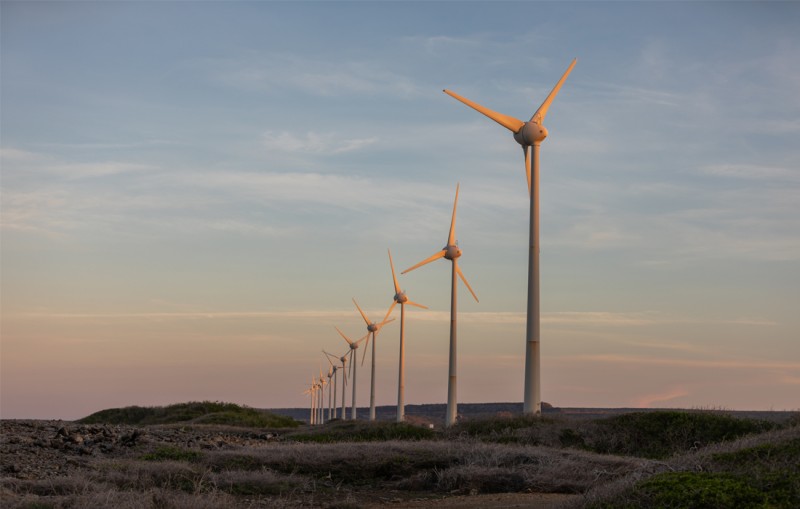
PARIS, FRANCE: Air Liquide and Sasol have signed two Power Purchase Agreements (PPA) with Enel Green Power for the long-term supply of a total capacity of 220 MW of renewable power to Sasol’s Secunda site, in South Africa, where Air Liquide operates the biggest oxygen production site in the world.
These PPAs are the first results of the Request for Proposal (RFP) process launched jointly by Air Liquide and Sasol in April, 2021, for the procurement of a total capacity of 900 MW of renewable energy.
They will significantly contribute to the decarbonization of the Secunda site, and in particular to the targeted reduction by 30 percent to 40 percent of the CO2 emissions associated with the oxygen production by 2031.
Within the framework of these agreements with Air Liquide and Sasol, two local majority owned wind projects will be created by Enel Green Power, the Enel Group subsidiary dedicated to the development and management of power generated from renewable resources worldwide. The 220 MW wind powered renewable electricity production capacity is scheduled to be operational in 2025.
“By signing these long-term PPAs with Enel Green Power, Air Liquide and Sasol actively support the development of renewable energies in South Africa, for the benefit of the South African electrical power system and the fight against global warming. This will also contribute to the South African social transformation and a “Just Transition”, and more generally to South Africa’s economy and environment,” said Ronnie Chalmers, Vice President and Executive Committee Member, Air Liquide Group, in charge of Africa Middle East & India.
“Sasol and Air Liquide’s efforts to procure a total of 900 MW of renewable energy to decarbonise our respective operations at Secunda is another step towards Sasol’s aim to procure 1.200 MW of renewable energy capacity from IPPs by 2030, representing one of the largest renewable energy procurement programmes from the private sector in South Africa. Sasol’s Renewable Energy Programme is aligned to the government’s REIPPP programme and plays a key role in creating alternative sources of energy for grid expansion to address South Africa’s current energy capacity constraints,” said Priscillah Mabelane, Executive Vice President of Sasol’s Energy Business.
In April 2021, Air Liquide and Sasol launched the largest corporate effort in South Africa to procure a total of 900 MW of renewable energy for their operations in Secunda, with an allocation of 500 MW to Sasol and 400 MW to Air Liquide. The two companies are negotiating with the remaining preferred bidders to this RFP to complete the balance of the renewable energy requested within the coming months.
Air Liquide acquired Sasol’s 16 oxygen production units in Secunda and has been operating them since June 2021, in the framework of a long-term supply contract with its long-term partner. Including another Air Separation Unit (ASU) it already operated for Sasol, Air Liquide thus now operates a total of 17 ASUs in Secunda, with a total capacity of 47,000 tonnes/day of oxygen.
Air Liquide plans to reduce by 30 to 40 percent CO2 emissions (Scope 2) arising from its operations on the Secunda site through a multi-year investment and modernization plan and a steep increase of the site’s procurement in renewable energies.
source: www.worldofchemicals.com
-
AR the future of metaverse as global market to reach US$700m
 Predicted to be worth $700m by 2030, there is no shortage of excitement when it comes to the metaverse, but what will it look like in the real world?
Whether it is healthcare, retail, social media or the workplace, the metaverse has the potential to change lives.
According to a study published by Research and Markets, the global metaverse market is expected to reach a revenue of US$700bn by 2030. With the increase in popularity of virtual reality, augmented reality and mixed reality, the metaverse is gaining momentum, enabling users to go about a normal conversation as an avatar in a ‘different world’
But according to a report by the World Economic Forum, the true benefits of the metaverse do not come from the creation of new digital worlds. They come through the integration of physical and digital worlds.
In a report, ‘3 shared principles to maximize the value of the metaverse’, AR technology company Magic Leap’s CEO Peggy Johnson explains how the metaverse could have transformative implications and create a ‘two-way bridge of spatially aware information.’
Powering the metaverse: AR for the ‘real world’
The move to the metaverse will require enormously sophisticated future technologies. According to Intel, to power the metaverse for hundreds of millions of users simultaneously, the world’s current computing, storage and networking infrastructure is ‘simply not enough’.
“We need several orders of magnitude more powerful computing capability, accessible at much lower latencies across a multitude of device form factors,” Intel says. “To enable these capabilities at scale, the entire plumbing of the internet will need major upgrades.”
According to Johnson, a key to the success of the metaverse includes integrating the physical and the digital, with AR representing a better fit ‘for the real world’.
“Platforms for the metaverse typically either use AR or VR,” she writes. “VR has come to life over the past decade through gaming, esports, and entertainment, with fully virtual avatars and environments. On the other hand, AR is a better fit for work in the real world.
“While there’s room for both in the growing metaverse market, AR ultimately has the greatest potential. With AR, you can still interact with the objects, tools, environments, and people around you – making adoption easier, providing greater value to existing activities and speeding the path to ROI. Plus, this paradigm feels more natural and intuitive, since human evolution has equipped us to interact this way.”
Build an open, interoperable metaverse ecosystem
As these technologies and applications emerge, industry players must choose the best model for bringing them to market: an open ecosystem or a walled garden, Johnson adds.
Last year Microsoft, Epic Games, Meta, and 33 other companies and organisations announced the formation of a standards group for metaverse technology.
“Building a metaverse for everyone will require an industry-wide focus on common standards,” said Vishal Shah, Vice President of Metaverse at Meta. “The Metaverse Standards Forum can drive the collaboration that’s needed to make this possible, and Meta is committed to this work. Creators, developers and companies will all benefit from the technologies and experiences that will be made possible by common protocols.”
Hosted by the Khronos Group, the Metaverse Standards Forum is open to any company, standards organisation, or university at no charge through a Participant Agreement.
“Open standards enable developers, hardware manufacturers, MDMs and other partners to work in concert – accelerating adoption, fuelling innovation and letting users decide the best idea,” added Johnson. “While a walled garden may fit certain use cases, communities or business models, these will serve best as “islands” within the wider ecosystem.”
Unleashing enterprises as first movers in the metaverse
Companies have already begun to adopt the metaverse, with Microsoft and Samsung owning 158 and 122 patents on the metaverse respectively. As Johnson describes, enterprises are primed to pioneer advances in the metaverse, just as they did for mainframe computing.
“AR is an ideal fit for essential, high-value work in real-world scenarios,” she writes. “These deployments justify the needed investment and unlock the greatest value – not just for companies and professionals, but for society through employment and inclusive growth.
“We’re seeing advanced AR applications emerge here first, from surgeons planning complex procedures, to manufacturing technicians using remote expert assistance, to first responders training for crisis scenarios. These are some of the initial use cases that most clearly benefit from integrating the digital and physical – but there are many more. Enterprises are leading the way because they understand the case for productivity, competitive advantage and value to their customers.”
source: technologymagazine.com
-
More Than 300,000 mt of Lithium Battery Scrap Was Recycled in China in 2022, Recycling Market to Embrace Both Opportunities and Challenges in 2023
SHANGHAI, Jan 20 (SMM) – According to SMM survey, a total of 300,258 mt of lithium battery scrap was recycled in China in 2022 (including scrap in the form of battery, pole piece and black mass). Among them, 188,692 mt of ternary battery scrap was recycled, accounting for 63% of the total recycling volume, versus 94,551 mt or 31% for LFP battery scrap, and 17,015 mt or 6% for LCO battery scrap.
Driven by lucrative profits, ternary battery scrap was favoured the most last year. Most recyclers only had ternary battery scrap dismantling facilities and hydrometallurgy production lines, while their LFP battery scrap recycling facilities were still under construction. The demand for ternary battery scrap surged with the release of recycling capacity, leaving it in short supply.
Due to recycling capacity bottlenecks, LFP battery scrap was primarily recycled by lithium salt smelters who have recycling facilities. Since 2022, some lithium salt enterprises have accelerated the construction of LFP battery scrap recycling facilities, and some have been put into operation, boosting the demand for LFP battery scrap.
LCO battery scrap was less popular due to weaker-than-expected demand for cobalt and poor cost performance resulting from its higher content of more expensive cobalt. Some recyclers added a small amount of LCO battery scrap into their ternary battery scrap recycling facilities in order to improve the recovery of cobalt.
A total of 68,141 mt of lithium batteries (retired power lithium batteries and electronics batteries) were recycled, accounting for 23% of the total recycling volume; 99,024 mt of pole pieces (pole pieces generated during battery production process) were recycled, accounting for 33%; 133,093 mt of black mass (battery powder and pole piece powder) was recycled, accounting for 44%.
Battery scrap mainly includes retired ternary power batteries and LFP power batteries, as well as a small amount of electronics battery scrap. The wave of power battery retirement has not yet arrived. Aggressive expansions by cathode active material (CAM) producers and battery cell makers led to increased supply of battery scrap generated during the production process. As a result, retired batteries accounted for a relatively small share of the total lithium battery scrap recycled last year.
Featured by relatively high lithium content and stable nickel-cobalt-lithium ratio, pole piece scrap can avoid the problem of doping. Moreover, pole piece scrap can be crushed into powder more easily than batteries, also making it very popular in the recycling market. However, exorbitant prices of pole piece scrap amid sky-rocketing lithium carbonate prices somehow deterred some recyclers.
Black mass was mostly recycled by hydrometallurgy lithium salt smelters, nickel salt smelters, and cobalt salt smelters. Hydrometallurgy smelters who do not have battery scrap dismantling equipment purchased black mass directly for production.
According to SMM data, in December 2022, the volume of nickel sulphate recovered stood at 32,380 mt in metal content, cobalt sulphate 25,418 mt in metal content, cobalt oxide 977 mt in metal content, industrial-grade lithium carbonate 18,708 mt, battery-grade lithium carbonate 21,560 mt, and crude lithium carbonate 18,323 mt.
Looking back on 2022, the lithium battery recycling market experienced several ups and downs. At the beginning of the year, the demand for lithium battery scrap spiked amid soaring lithium carbonate prices, driving the price coefficient of nickel and cobalt to 160% at one point. Nickel prices sky-rocketed in early March, triggering wait-and-see sentiment among recyclers. In late March, China suffered a new wave of Covid outbreak, with Shanghai in two-month lockdown, severely disrupting the supply chain and production of auto makers. As a result, the demand for ternary batteries declined, weighing on the prices of nickel salt, cobalt salt, and lithium salt. Some recyclers slowed down their purchases to minimise the risks on their costs and profits.After Shanghai lifted its lockdown in early June, the demand for ternary batteries gradually recovered. Recyclers restocked aggressively after running out of their inventories, shoring up battery scrap prices again. With intensified competition in lithium battery recycling market in the second half of the year, the price coefficient of nickel and cobalt contained in battery scrap rose drastically to 240%, while lithium was not priced. To tackle the chaotic market prices, an increasing number of smelters began to price lithium separately when purchasing battery scrap from late August.
The lithium battery recycling boom came to an abrupt end in mid-November due to imminent expiration of NEV subsidies at the end of 2022 and output cuts by ternary battery makers. Industrial-grade lithium carbonate and crude lithium carbonate produced with battery scrap barely found any buyer, while the prices of nickel sulphate and cobalt sulphate went down amid faltering demand. In response, some major smelters proposed to use SMM nickel sulphate, cobalt sulphate, and industrial-grade lithium carbonate prices as the pricing benchmark when purchasing battery scrap so as to avoid the cost risk brought about by volatile metal prices. The recycling market cooled down in December. Recyclers restocked only as needed and were in a rush to clear their inventories.
In 2022, recyclers tried to minimise their risks by responding swiftly to the price fluctuations of battery scrap and their finished products, as well as market trends. The recycling market expanded with the entry of new players.
In 2023, the supply of battery scrap is expected to grow along with the retirement of more power batteries and increased amount of battery scrap generated in production process. It is essential for recyclers to have stable sources of battery scrap amid rapidly expanding recycling market. Some recyclers have set up power battery recycling outlets or cooperated with battery makers to enhance their supply chain stability. Several leading recyclers have emerged amid fierce market competition.
The lithium battery recycling market will be full of opportunities and challenges in 2023, and SMM will keep a close eye on the market dynamics.
source: news.metal.com
-
EBay Invests in Luxury Resale Platform Cudoni

The UK-based luxury resale company announced the £7.5 million ($9 million) raise Monday.
EBay’s venture arm participated in the funding round, while Cudoni also raised capital from existing investors such as The Daily Mail Group Ventures and veteran retail executive Andrew Jennings.
Resale remains a fast-growing fashion market, despite profitability challenges for large players as they scale. It’s also an area where eBay has been looking to expand its market positioning.
“It is an outstanding vote of confidence in the brand and our ambitions, to receive investment from recommerce pioneer, eBay, during what has been an incredibly tough year for the consumer sector,” said founder and chief executive, James Harford-Tyrer, in a statement.
The latest investment brings the total raised by Cudoni to £14.3 million since its founding in 2017.
The company plans to invest the £7.5 million raised in its sales and marketing functions, “with a view to offering what we do on a larger scale to a greater number of people,” Harford-Tyrer told BoF.
Since the end of 2020, the volume of sales on the resale platform has increased sevenfold.
The platform says it connects “millions of buyers and sellers worldwide” and has items from over 4,000 brands available for purchase on its site, across categories such as luxury handbags, watches and jewellery, and streetwear.
source: www.businessoffashion.com
-
Subscribe
Subscribed
Already have a WordPress.com account? Log in now.
 Site Title