-
Zara Says It’s Time Its Home Market Pays for Online Returns
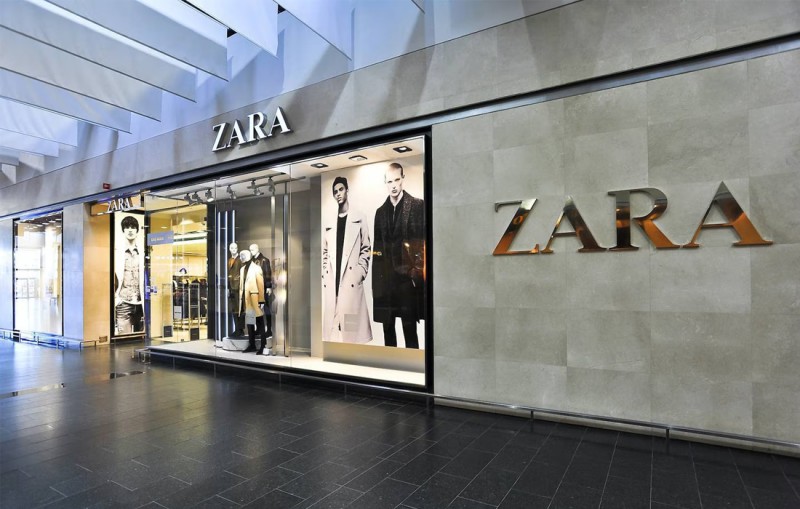
Inditex SA, the owner of fast fashion chain Zara, will start charging Spanish shoppers for returning items bought online, mirroring a strategy it had previously rolled out in most of its other markets.
Customers in Spain will now have to pay €1.95 to return an order, unless they take it to a brick-and-mortar shop or third-party drop-off points where returns remain free. The fee applies for all Inditex brands, which include Pull & Bear and Massimo Dutti, according to a company spokesperson.
The A Coruna, Spain based-firm, the world’s biggest clothing chain, had started charging for returns in the earlier part of 2022 in countries where it has a smaller presence than in Spain, including the UK, France and the US. Spain accounted for 14.2 percent of the group’s overall sales as of July 2022.
Inditex rose as much as 1.7 percent to €29.3 at 9:36 a.m. in Madrid. The shares are up 4.5 percent this year.
The shift to end free returns gained traction across the apparel industry last year as retailers sought to contain costs amid accelerating inflation across the globe. Spain was among the Western European countries that recorded the highest inflation rate in the earlier part of 2022, having reached double digits during the summer months. It has since dropped to 5.8 percent in January, below most other nations in the region.
To be sure, the strategy had been a headache for retailers from the get-go as returns are costly because of the labor to have them shipped back, inspected and put up for resale.
Large Inditex rivals, such as Hennes & Mauritz AB and Fast Retailing Co’s Uniqlo, charge for online returns in Spain.
source: www.businessoffashion.com
-
Tailor-made cable interfaces with new online shop for igus Module Connect

Module Connect from igus is a space-saving connector for electrical cables, fibre optic cables and pneumatic hoses. It is mainly used where several cables are plugged into energy chains in the smallest possible space. For individual configuration of these plug-in modules, at no cost, igus has now expanded its online shop by 180 additional parts designed for the Module Connect.
One connector instead of many individual connectors: that’s the aim of igus’s Module Connect, a modular system for connecting cables. A customer can select suitable modules from a variety of different connectors, combine them with each other, select the appropriate housings and connect them, making nearly unlimited module variations in individual width and height possible. The result: a space-saving, customised plug connection. igus uses the “Han Modular” range from Harting as the connector system.
“By using the Module Connect, customers receive a ready-to-connect module with a defined interface that saves 80% assembly time,” explains Justin Leonard, director of e-chain products at igus UK. To help with easy module design and purchase, igus’s online shop now offers 180 individual parts for the Module Connect in addition to finished sets with three or four cable inputs, including housings and interlocks to power, signal, data transmission and pneumatic modules and contacts. “Users can freely assemble their own, tailor-made interfaces,” says Justin. “We are constantly expanding our offering for these cable assemblies.”
Stable and secure connection
Accessories such as locking elements and strain relief that are integrated in the housing ensure maximum reliability. The module encloses the plug and ensures a stable connection even with tens of thousands of movements. The Module Connect housing components are made of a fibre-reinforced, high-performance plastic, which can save around 50% weight compared to classic rectangular connectors. The Module Connect adapter connects the Module Connect connector and the energy chain into a coherent assembly. Even existing energy supply systems can be easily supported with the Module Connect adapter.
source: www.machinery.world
-
Gold hits over 9-month highs as U.S. Fed chief strikes dovish tone

Gold prices rebounded sharply on Wednesday as the Federal Reserve chief’s surprisingly dovish remarks on the central bank’s fight to bring down inflation sank the dollar and signaled to investors that a peak in interest rates was likely approaching.
Spot gold climbed 1.2% to $1,951.43 per ounce by 3:48 p.m. ET, its highest since mid-April 2022.
U.S. gold futures settled 0.1% lower at $1,942.80.
Calling Fed Chair Jerome Powell’s press conference ‘relatively dovish’, Standard Chartered analyst Suki Cooper said “signaling the path to peak rates and highlighting falling inflation has given gold prices a boost as the USD weakened and real rates eased.”
“We maintain our view for the Fed to pause before cutting rates in H2-23. Gold has found tremendous support from central bank additions and gold investor positioning is elevated for this stage of a hiking cycle, suggesting that many of the macro tailwinds have been priced in and prices are likely to peak in Q1-23.”
The Fed raised its target interest rate by a quarter of a percentage point on Wednesday, yet continued to promise “ongoing increases” in borrowing costs as part of its still unresolved battle against inflation.
“Powell’s given a bullish market a license to rally,” said Tai Wong, a senior trader at Heraeus Precious Metals in New York. “If the intention was to provide a hawkish 25-bps hike this was an inadequate performance.”
“He qualified every hawkish statement. Asset markets roared, the USD fell to new, recent lows and gold surged nearly a percent. It’s only a matter of time before gold makes new highs and dips will be bought,” Wong said.
Greenback-priced gold is highly sensitive to rising U.S. interest rates, which raise the opportunity cost of holding non-yielding bullion, and vice versa.
Spot silver rose 1.3% to $24.01 per ounce, while platinum dipped 0.4% to $1,007.63, and palladium gained 1.7% to $1,676.72.
source: www.cnbc.com
-
UK Watchdog Casts Eye on Richemont Deal to Sell Online Retailer to Farfetch
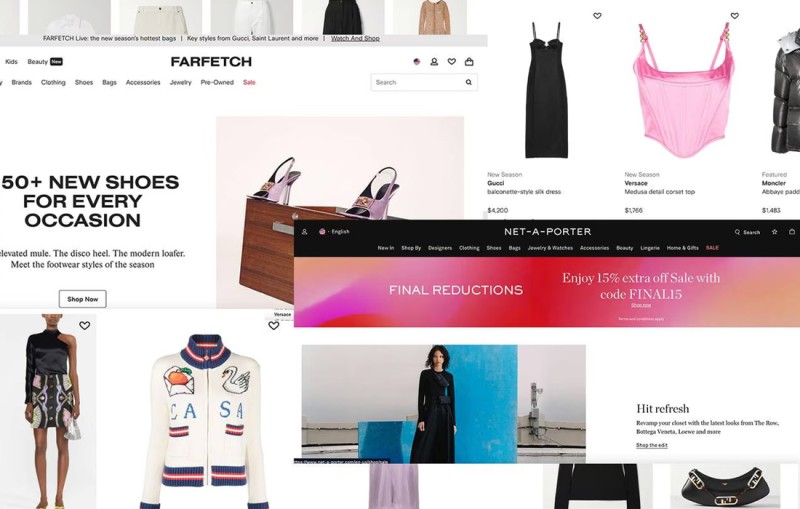
Britain’s competition watchdog on Tuesday said it was seeking comment on whether Richemont’s deal to offload most of its online fashion retailer YOOX Net-A-Porter (YNAP) to Farfetch could harm competition in the UK.
If completed, the deal announced last August would clear the way for Richemont’s labels to sign up for technology run by luxury e-commerce specialist Farfetch.
The Competition and Markets Authority said it was considering if the anticipated acquisition by Farfetch of a shareholding and certain rights over YOOX Net-A-Porter Group may lead to a “substantial lessening” of competition within any market or markets in Britain.
Richemont, maker of Cartier jewelry and IWC watches has said it expects a 2.7 billion euro ($2.93 billion) writedown related to the agreement in which Farfetch will initially acquire a 47.5 percent stake, in exchange for over 50 million Farfetch shares.
The deal comes amid a flurry of industry-wide investments in digital services as luxury players shrug off past skepticism and embrace new channels to reach customers, spurred by a faster shift to online consumption during the pandemic.
source: www.businessoffashion.com
-
Column: Germany needs more baseload power for vital industrial reboot
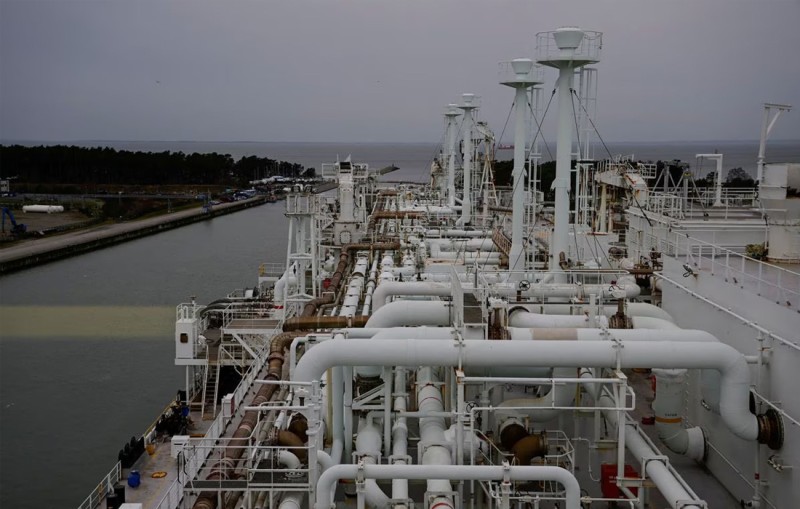
LITTLETON, Colo., Jan 31 (Reuters) – Europe’s main industrial engine – Germany – may be entering a recession after its economy shrank in the final quarter of 2022.
The 0.2% quarter-on-quarter contraction in gross domestic product is a shallower decline than many economists had feared in early 2022, when Russia’s invasion of Ukraine sent power prices surging and hobbled German businesses.
Even so, the contraction in such a key manufacturing powerhouse underscores the challenge facing European authorities as they urgently try to revive industries that generate vital jobs and tax revenues but have been hamstrung by record high energy costs for much of the past year.
European power prices have fallen from their 2022 peaks, but remain too far above long-term averages to allow major manufacturers to profitably restore operations to previous levels.

Germany year ahead power prices In Germany, by far Europe’s largest manufacturer and exporter, power costs in 2022 averaged over 4 times the 2018-2021 average and at the start of 2023, remain more than twice that average, according to Refinitiv data.
That has put the government under intense pressure to alleviate the strain on industries and households and help rekindle growth.
UNEVEN OUTPUT CURBS
High power prices have had a wide range of repercussions across industries.
Some high profile sectors, such as Germany’s famed car manufacturers, have seen output drop by roughly a third from their long term average as the combination of parts shortages plus surging power costs forced production curbs.

Title Germany car output by BMW, Mercedes & Volkswagen Some more basic sectors, such as chemicals and fertilizer producers, have had to cut production by even steeper margins, with an index of the country’s output of chemicals hitting its lowest since early 2009.

Germany output of key industrial products Other major employers, including steel firms and fertilizer makers, have also been forced to aggressively throttle back production.
ENERGY CONSERVATION
Germany’s power rationing to key industries, along with more severe capacity cuts in other areas, helped avert a more aggressive economic slowdown in 2022.
But if the economy is to recover momentum in 2023 and beyond, a more comprehensive and sustained increase in output is needed across a wider array of industries.
That will require more abundant and more affordable energy for all consumers.
However, power producers look set to remain constrained in terms of baseload power fuel options, which are necessary to complement the increasing volumes in intermittent renewable energy supplies from solar and wind installations.
Coal has been Germany’s main source of overall and baseload power for decades, but the country has steadily reduced the proportion of power generated from coal from roughly 42% in 2015 to 23% in 2020, according to data from Ember.
Germany’s power producers have also aggressively ramped up power from intermittent renewable sources, with solar and wind generation totals both rising by more than 50% since 2015.
Over the same period, power firms boosted use of cleaner-burning natural gas from 10% to 16.5%, reducing the country’s overall power sector emissions in the process.

Germany electricity mix from 2015 through 2022 Germany’s other sources of baseload power – which can be despatched on command to plug any shortfalls in renewable energy – are nuclear, which provided 12.85% of electricity from 2015-2019, and hydropower dams, which generated around 3% of electricity since 2015.
TRIPLE WHAMMY
In 2022, Germany’s power sector was roiled on multiple fronts as gas supplies dried up due to the Russia-Ukraine conflict just as dry conditions reduced hydro power and planned reactor shutdowns curbed nuclear power supplies.
To sustainably resurrect Germany’s power-hungry manufacturing giants, energy producers will need to build out more baseload generation along with renewable power, so that sophisticated production lines receive uninterrupted power at all times – even on cloudy or windless days.
As both coal and natural gas come with heavy emissions tolls and hefty import price tags, utilities and policymakers may look to non-emitting nuclear and hydropower to deliver those baseload supplies.
Nuclear and hydro plants come with plenty of hurdles, including high costs and well organised opposition to both types of installations.
But Germany’s renowned manufacturing economy will not be able to return to its previous dominant position without abundant baseload power.
That means policymakers, utilities and businesses will all need to quickly agree on the best form of that power, or risk additional and potentially deeper economic contractions in the years ahead.
source: www.reuters.com
-
ExxonMobil to build largest renewable diesel facility in Canada
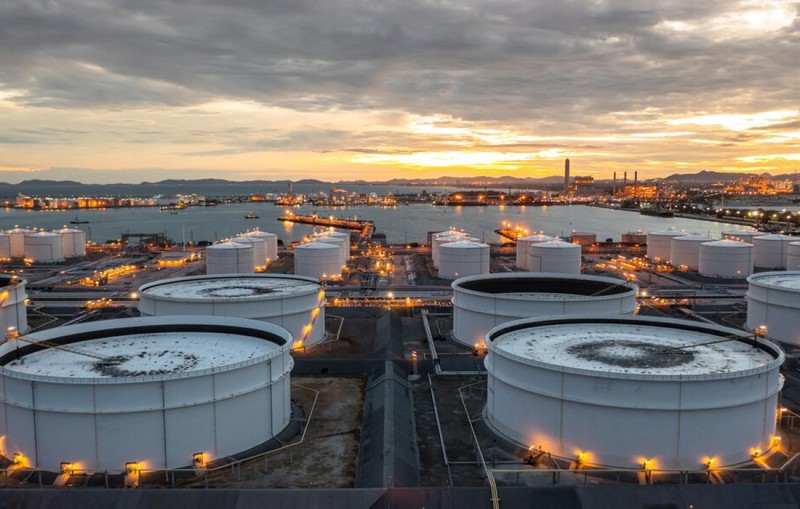 ExxonMobil’s affiliate, Imperial Oil Ltd, will invest $560 million at Imperial’s Strathcona refinery (in picture) to construct the largest renewable diesel facility in Canada. It is expected to produce 20,000 barrels of renewable diesel/day.
IRVING, US: ExxonMobil announced its majority-owned affiliate, Imperial Oil Ltd, will invest about $560 million to move forward with construction of the largest renewable diesel facility in Canada. Site preparation and initial construction are underway. Renewable diesel production is expected to start in 2025.
The project at Imperial’s Strathcona refinery is expected to produce 20,000 barrels of renewable diesel per day primarily from locally sourced feedstocks and could help reduce greenhouse gas emissions in the Canadian transportation sector by about 3 million metric tons per year, as determined in accordance with Canada’s Clean Fuel Regulation.
The facility is a part of the corporation’s plans through 2027 to invest approximately $17 billion in lower-emission initiatives.
• Imperial’s Strathcona refinery expected to produce 20,000 barrels of renewable diesel per day
• $500+ million project will use low-carbon hydrogen, carbon capture and storage technology
• Renewable diesel has potential to reduce annual greenhouse gas emissions by about 3 million metric tons compared to conventional fuels“The Strathcona project is another example of how we are investing in advantaged facilities and applying our leading technology and decades of experience to develop lower-emission solutions for customers,” said Karen McKee, President of ExxonMobil Product Solutions. “We continue to focus investments on markets like Canada, where well-designed policies support technologies that reduce life-cycle emissions.”
Imperial’s renewable diesel facility will use low-carbon hydrogen produced with carbon capture and storage technology to help Canada meet low emission fuel standards. Imperial has entered into an agreement with Air Products for low-carbon hydrogen supply and is developing agreements with other third parties for biofeedstock supply.
The low-carbon hydrogen and biofeedstock will be combined with a proprietary catalyst to produce premium lower-emission diesel fuel and will help reduce greenhouse gas emissions from the transportation sector, relative to conventional fuels.
The project is expected to create about 600 direct construction jobs, along with hundreds more through investments by business partners.
source: www.worldofchemicals.com
-
Here’s why ChatGPT might be ‘at capacity’ for you right now

AI-powered ChatGPT has recently been frustrating a sizable number of potential new users due to its own popularity, resulting in a very common “at capacity” notice that many people are facing.
Unfortunately, right now, there’s only one solution available, and that’s to wait it out or come back at a time when less people are using it.
OpenAI’s breakout chatbot star ChatGPT (released in November 2022) uses machine learning to generate responses from questions or queries entered by users. It’s been blowing people’s mind in how mature and chatty it is, while also raising a series of ethical problems that everyone is talking about.
But recently, the biggest issue has been access. For the last few weeks, reports have flooded in from those who wanted to create a new account or access the site on ChatGPT’s page couldn’t due to traffic congestion.
What visitors saw was a message that read: “Chat GPT is at capacity right now.” Basically, that meant that the website is in high demand and had reached its capacity for users per session and/or query load. The servers powering ChatGPT are very expensive to run, and OpenAI appears to have putting limits on that usage following the incredible explosion in interest.
Amusingly, instead of canned messages, ChatGPT has been doling out creative ways to relay its at-capacity status. So far, people have seen the chatbot communicate in limerick rhymes, a rap, and even in pirate-speak. While the crashes have been frustrating, at least visitors have found the messages entertaining.
At the time or writing, I had no trouble creating a new account and/or chatting away, but if you’re facing this error, the solution is quite simple: You just need to wait. Just click on the “get notified” link, enter your email address, and you should get an email when it’s reached your place in line.
Understand that ChatGPT is still a prototype, and its increasing popularity has been overwhelming the servers. People have reportedly been able to use the site after waiting for about an hour or less.
Beyond that, ChatGPT has recently announced that a premium tier version is in the works, called ChatGPT Pro. You can now join a waitlist for the service, which will be a paid tier that promises better access and faster responses. This is a way for OpenAI to monetize the chatbot and give prioritized access to paid subscribers.
source: www.digitaltrends.com
-
Jeddah anticipates $90bn real estate and infrastructure projects by 2030
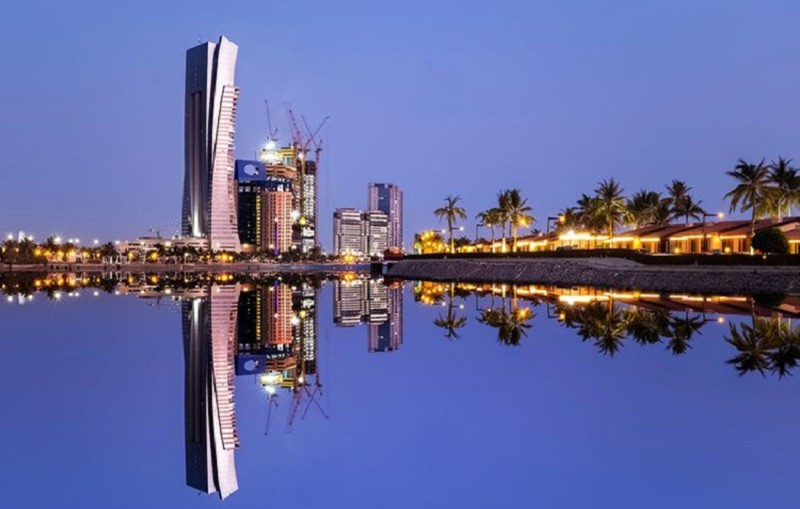
The Red Sea port city of Jeddah is set to see $90 billion of real estate and infrastructure projects developed by 2030, according to an analysis carried out by global property consultant, Knight Frank.
Faisal Durrani, partner – Head of Middle East Research at Knight Frank, explained: “As the tentacles of Vision 2030 spread across the kingdom, we are seeing every corner of the kingdom transformed. As Saudi Arabia’s ‘second city’ and historic gateway to the Holy Cities of Makkah and Madinah, Jeddah is being revitalised through a dramatic wave of investment that is set to transform the city.
“With some 89,000 new homes, 250,000m2 of offices and nearly 1.4 million m2 of retail space, the city will be significantly revitalised by the end of the decade.”
According to Knight Frank, nearly $14 billion of the total spend is dedicated to new infrastructure, including a new “land bridge” that will involve the construction of 1,500km of railway lines linking towns and cities between the eastern and western parts of Saudi.
A further $7bn has been earmarked for the expansion of Jeddah Islamic Port, where the container capacity will be raised to 20 million, positioning it among the ten busiest ports in the world.
Like elsewhere in the kingdom, there is a big focus on projects linked to well-being, says Knight Frank, as the government works to improve and enhance the habitability and liveability of Saudi cities.
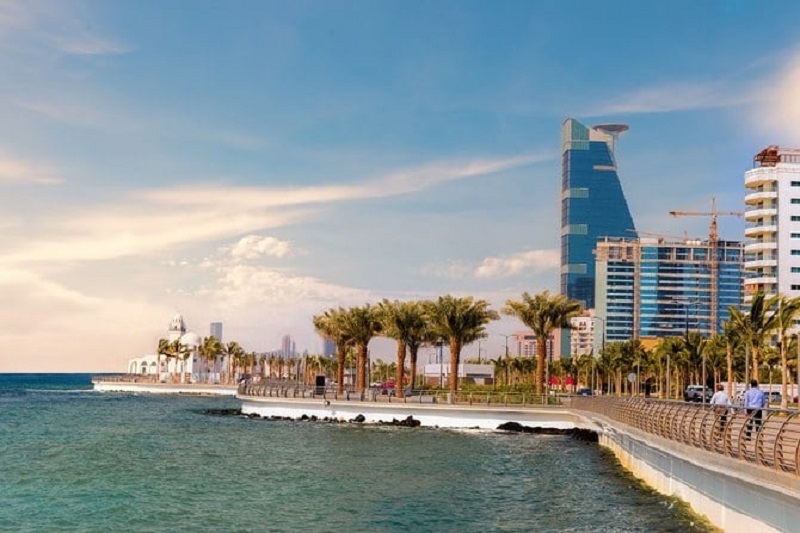
Yazeed Hijazi, associate partner, Real Estate Strategy & Consulting KSA, said: “With nearly $3.3 billion earmarked for well-being projects, the residents of Jeddah are set to benefit from improvements to the city’s leisure, cultural, education and healthcare facilities.
“While perhaps considered secondary to more grandiose giga-projects elsewhere in the country, improved healthcare and educational facilities in particular help to boost the standard of living and make cities more attractive places to live – and this is something that will help Jeddah cement its position as the Red Sea’s main commercial hub while also making it an even more attractive city to live and work in.”
Hospitality sector potential
Knight Frank points to an area of opportunity that remains yet to be fully realised is around Jeddah’s hospitality sector.
The exceptional growth in demand as a result of economic diversification initiatives as well as the recent boom in the number of leisure and religious tourists underpin the hospitality sector’s enormous potential.
To respond to the expanding demand and as part of the economic transformation plans, new hotels are being planned to accommodate the government’s forecast increase in visitor numbers.
In fact, there are 9,300 rooms under construction or in the planning stages in Jeddah that are expected to be completed between now and 2030, which would bring the city’s total supply to 21,000 rooms, according to Knight Frank’s data. However, there are just 2,700 rooms currently announced to be built within the city’s mega projects, which represents 29% of the total hotel supply pipeline in Jeddah.
Durrani concluded: “The popularity of Jeddah Season and the Jeddah F1, combined with the ultra-fast and modern rail links to the Holy Cities means Jeddah’s potential as an international tourist destination is only now starting to grow.
“And with plans to draw 100 million tourists to Saudi Arabia by 2030, the city still has the potential to develop a vibrant tourist market, particularly given the wide range of pre-existing attractions and more temperate climate, relative to the rest of the Gulf region.”
Exploring Jeddah’s infrastructure pipeline
As the principal gateway to Makkah, Jeddah is a key, growing urban hub for the Kingdom of Saudi Arabia and for the Middle East. With a strong list of transportation and infrastructure projects, Jeddah is committed to achieving the Saudi Vision 2030 goals.
Analysing the infrastructure project pipeline in Jeddah, Construction Weekis launching the KSA Infrastructure Summit, set to take place on 7 March.
The event will bring industry leaders and experts on the ground to discuss how Jeddah could become a smart city with world-class infrastructure.
source: www.constructionweekonline.com
-
Canada injects $75 million into BHP’s Jansen potash mine
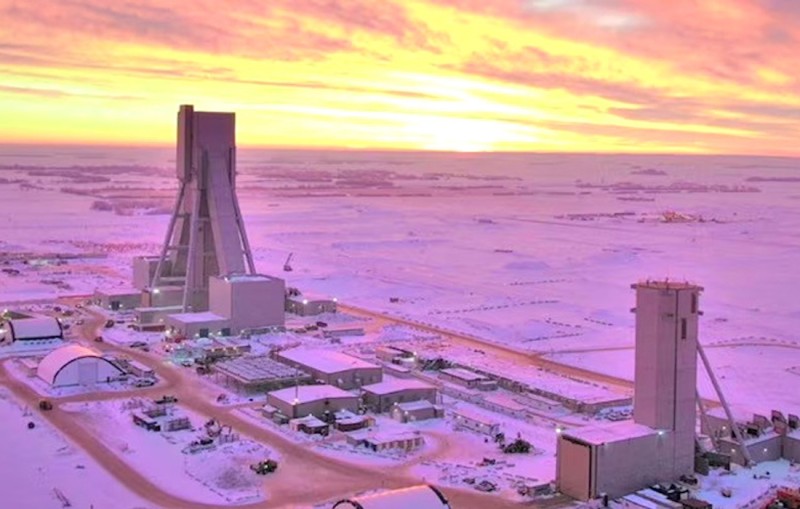 With billions of dollars spent in the past decade, BHP has already built two mine shafts and is planning for first potash production in 2026. (Image courtesy of BHP.)
The government of Canada is investing C$100 million ($75m) to support the development of BHP’s low-emissions Jansen potash mine in Saskatchewan, about 140 km east of Saskatoon.

The cash injection will be made through the Strategic Innovation Fund and forms part of Canada’s efforts to help its mining sector transition toward a low-carbon economy.
BHP is seeking to accelerate construction at its only potash project as high gas prices and sanctions on key exporters continue to disrupt global supplies of fertilizers.
The world’s largest miner is building Jansen in stages, with the first phase estimated to cost $5.7 billion.
The company had originally planned to kick off production at the underground potash mine in 2027. Market conditions, however, have prompted it to attempt bringing forward Stage 1 first production into 2026, which is expected to yield 4.35 million tonnes of potash per year.
This means BHP will need as many as 2,500 people on site this year, in which the company expects to pour concrete foundations for the mill and other processing and storage facilities to start erecting steel structures.
Canada Innovation, Science and Industry Minister François-Philippe Champagne said the investment shows how much the federal government is committed to Saskatchewan as well as to Canada’s mining and agricultural sectors.
“We know how critical potash is for our country when it comes to food security,” he said, adding that the project will lead to the creation of hundreds jobs for Canadians while also encouraging green initiatives in the mining industry.
Upon commissioning, the mine is expected to increase Canada’s critical mineral production by nearly 22%, making it one of the world’s top producers.
Quarter of global supply
Potash is seen by farmers as an attractive resource because of its use as fertilizer, which also boosts drought tolerance and improves crop quality.
BHP expects potash demand to increase by 15 million tonnes to roughly 105 million tonnes by 2040, or 1.5% to 3% a year, along with the global population and pressure to improve farming yields given limited land supply.
Jansen had the potential to produce 17 million tonnes a year under a four phased development. This would account for about 25% of current global potash demand.
The mine is the first new underground potash operation built in 30 years in Saskatchewan and will be the world’s largest once completed.
source: www.mining.com
-
Gucci’s Challenge: Reigniting Heat While Boosting Timeless Appeal
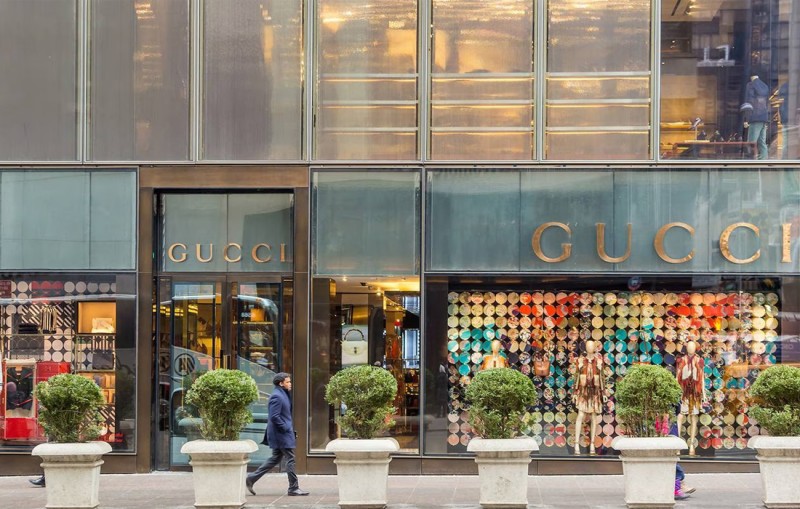
Sabato De Sarno, newly appointed by Kering to reinvigorate its prized Gucci brand, needs to spark heat with a new direction, analysts say — a delicate task, given the emphasis executives have also put on the label’s timeless appeal.
De Sarno, a senior fashion designer from Valentino, is tasked as creative director with reviving the fortunes of the brand that accounted for two-thirds of Kering’s profits in 2021.
An emphasis on classics was a priority outlined by executives at the company’s investor presentation last year, and Gucci has recently revived its bamboo-handle model handbag from 1947, as well as its over-the-shoulder Jackie bag from 1961.
But analysts say De Sarno will also have to generate buzz with hot new styles – a strategy that has traditionally served the brand well, compared to the path taken by some rivals that focus more strongly on signature classics, especially handbags.
“The future of Gucci is not to become another (Louis) Vuitton, Chanel or Hermes, but to nurture its fashion content to drive customers back to the brand,” said Antoine Belge, analyst with Exane BNP Paribas.
Kering declined to comment on its strategy for the brand.
The group had been under pressure to quickly appoint someone to the top creative job at Gucci following the abrupt departure in November of Alessandro Michele.
The flamboyant designer, who was a favourite of Harry Styles and Lady Gaga, had overseen a period of soaring growth in 2015-19, with eccentric, gender-fluid designs.
However in recent quarters Gucci has lagged rivals including Hermes and LVMH’s top brand Louis Vuitton, with its performance in the key Chinese market becoming a source of concern for investors amid COVID-19 lockdowns.
For Bernstein analyst Luca Solca, Gucci needs to make a strong statement to return to the center stage. “Gucci has to be over the top in order to thrive,” said Solca.
Analysts welcomed Kering’s choice of a seasoned but relatively unknown designer, noting that previous creative director Michele did not have a public profile when he was appointed in 2002.
“Another bold choice that may work well again,” said Jefferies analyst Flavio Cereda, though he cautioned that the director’s task was not “straightforward this time”.
Among challenges cited by Cereda is potential turmoil as Gucci brings on an outsider while the previous designer’s teams are still in place, and the time it will take for the market to understand a new direction from the label.
De Sarno will show his first Gucci collection in September in Milan. His experience at Valentino suggests a “less eccentric aesthetic” than Gucci’s previous designer, noted Carole Madjo of Barclays.
The designer rose through Valentino’s ranks after his arrival in 2009 to become fashion director overseeing both the men’s and women’s collections, working closely with chief designer Pierpaolo Piccioli.
Now, “all eyes will be on de Sarno’s talent and creativity, and how he can collaborate with the merchandising team at Gucci,” said Caroline Reyl, head of premium brands at Pictet Asset Management.
Creative directors are particularly scrutinized when a brand is in a transition, she said.
The announcement of his appointment came ahead of Kering’s Feb. 15 earnings release, which will likely show the label’s fourth-quarter sales saw one of the more pronounced slowdowns among the world’s top fashion labels due to coronavirus disruptions in China.
Kering’s share price was mostly flat on Monday, down 0.1% at 1333 GMT.
source: www.businessoffashion.com
-
Subscribe
Subscribed
Already have a WordPress.com account? Log in now.
 Site Title